How SEO Can Help Your Business Grow
In the digital age, having a stunning website isn’t enough. If your target audience can’t find you when they search online, it’s like owning a shop in the middle of the desert—no one knows you’re there. That’s where Search Engine Optimization (SEO) comes in. It’s the art and science of making your website visible to the people who matter most: potential customers.
Let’s explore how SEO can transform your business and set you on the path to long-term growth.
What is SEO?
SEO, or Search Engine Optimization, is the process of improving your website to rank higher on search engines like Google, Bing, or Yahoo. When done right, SEO ensures that your website appears at the top of the search results when someone looks for products or services you offer.
The magic of SEO lies in its ability to bring organic (free) traffic to your site—visitors who are actively searching for what you provide.
How SEO Can Grow Your Business
1. Boost Your Online Visibility
SEO is all about getting your business in front of the right eyes. Think about it: when was the last time you clicked on the second page of Google? Exactly.
By optimizing your site with the right keywords, meta descriptions, and content, SEO ensures you show up where your customers are looking.
For example:
- A local bakery optimizing for “best cupcakes near me” can attract nearby customers searching for a sweet treat.
2. Drive High-Quality Traffic
The beauty of SEO is that it targets users who are actively looking for what you offer. Unlike paid ads, where you push your message to an audience, SEO pulls people in. This means the traffic you get is more likely to convert.
For example:
- A real estate agency optimizing for “affordable homes in Austin” will attract potential buyers ready to make a move.
3. Build Trust and Credibility
Ranking high on search engines signals to users that your business is trustworthy and reputable. People tend to trust Google, and if you’re on the first page, they’re more likely to trust you too.
For instance:
- A fitness trainer with a website optimized for “personal training tips” can establish authority in their field, encouraging visitors to book sessions.
4. Deliver Long-Term Results
Unlike paid ads, which stop delivering as soon as you stop paying, the benefits of SEO compound over time. A well-optimized blog post or product page can continue to attract traffic for months or even years.
Imagine:
- An eco-friendly brand writing an evergreen blog post like “10 Ways to Reduce Plastic Waste.” This post can rank and generate consistent traffic long after it’s published.
5. Stay Ahead of the Competition
Your competitors are likely investing in SEO, and if you’re not, you risk being left behind. By optimizing your site, you can compete with (and even outrank) bigger players in your industry.
For example:
- A local boutique optimizing for “handmade jewelry near me” can outshine larger retailers targeting the same keyword.
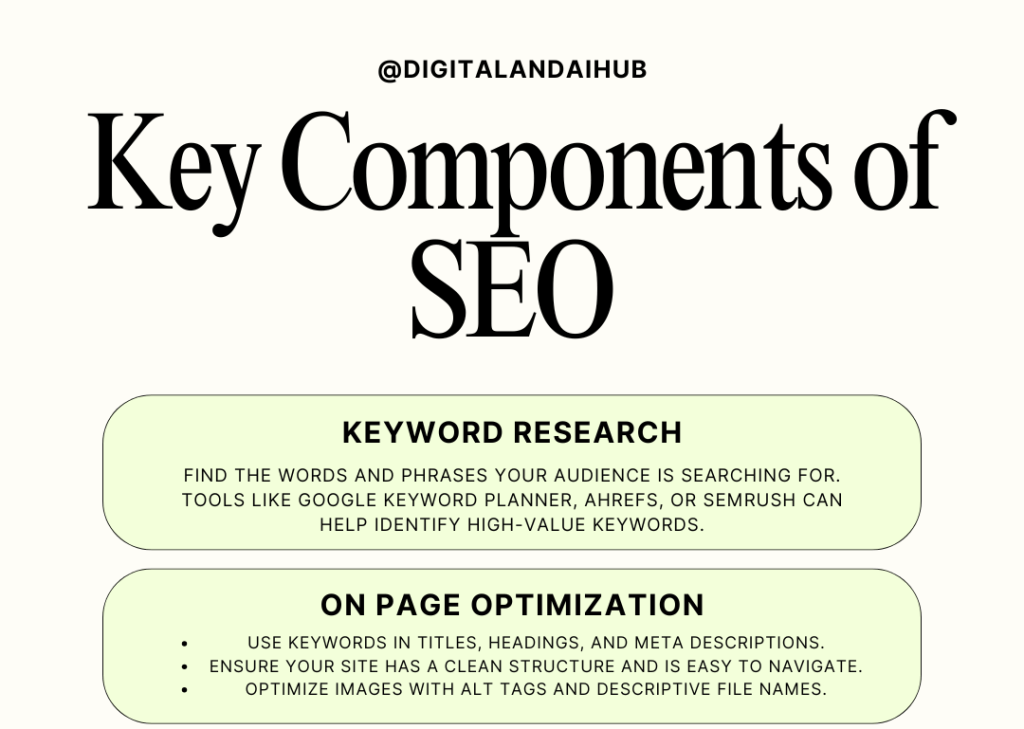
Key Components of SEO
- Keyword Research Find the words and phrases your audience is searching for. Tools like Google Keyword Planner, Ahrefs, or SEMrush can help identify high-value keywords.
- On-Page Optimization
- Use keywords in titles, headings, and meta descriptions.
- Ensure your site has a clean structure and is easy to navigate.
- Optimize images with alt tags and descriptive file names.
- Content Creation Create high-quality, relevant content that answers your audience’s questions. Blog posts, how-to guides, and product descriptions are great places to start.
- Technical SEO
- Ensure your site is mobile-friendly and loads quickly.
- Fix broken links and optimize for secure connections (HTTPS).
- Use structured data to help search engines understand your content.
- Backlink Building Earn links from other reputable websites. These act as “votes of confidence” for your site, helping boost your rankings.
- Local SEO If you’re a local business, optimize for location-specific keywords and set up a Google My Business profile.
The ROI of SEO
SEO is an investment, not an expense. It takes time to see results, but the payoff is worth it. Businesses that consistently optimize their sites often see:
- Increased website traffic.
- Higher conversion rates.
- Lower customer acquisition costs compared to paid ads.
For instance:
- A travel agency ranking for “family vacation packages” can save on ad spend while attracting a steady stream of organic leads.
Why Your Business Needs SEO
In today’s competitive landscape, having a website isn’t enough—it needs to work for you. SEO ensures that your site isn’t just a digital brochure but a powerful tool for attracting, engaging, and converting customers.
Whether you’re a small business owner looking to grow locally or an e-commerce brand aiming for global reach, SEO is your ticket to sustainable, long-term growth.
Final Thoughts
SEO isn’t just about ranking higher; it’s about connecting with your audience when they need you most. It’s about being the solution to their problem, the answer to their question, or the product they didn’t know they needed.
So, where will SEO take your business next? Start optimizing today and watch your business grow, one search result at a time.
Have you implemented SEO strategies for your business? Share your successes (or challenges) in the comments below—I’d love to hear your story!
 The Digital Marketing and AI Hub
Leave a comment