Google Gemini 2.0: The AI Revolution That’s Changing Paid Search
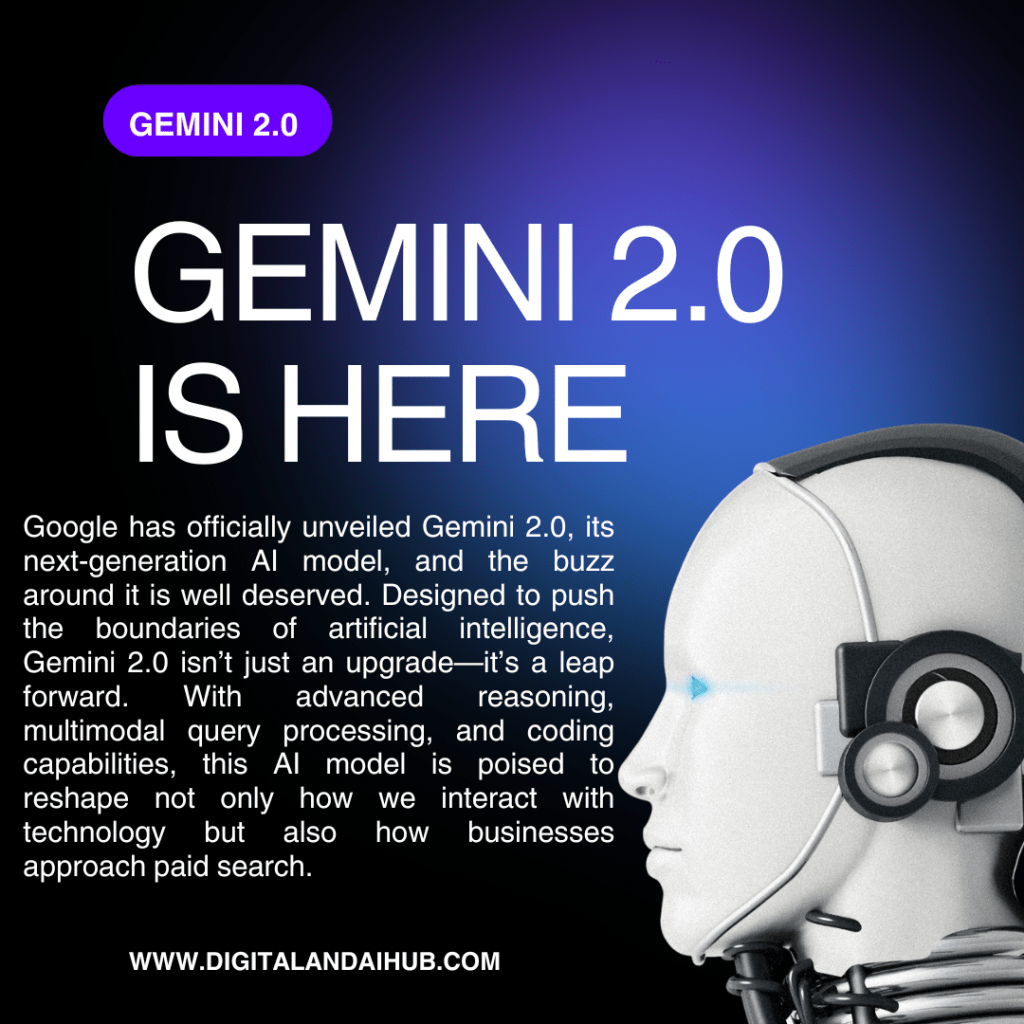
Google has officially unveiled Gemini 2.0, its next-generation AI model, and the buzz around it is well deserved. Designed to push the boundaries of artificial intelligence, Gemini 2.0 isn’t just an upgrade—it’s a leap forward. With advanced reasoning, multimodal query processing, and coding capabilities, this AI model is poised to reshape not only how we interact with technology but also how businesses approach paid search.
Let’s dive into what this means for marketers and why Gemini 2.0 might just be the biggest game-changer for paid search campaigns in 2025 and beyond.
What Makes Gemini 2.0 So Powerful?
1. Advanced Reasoning
Gemini 2.0 has been built to understand and process complex, multi-step queries. This means that users can now ask Google questions that require layered reasoning, such as calculating detailed budgets or understanding intricate concepts. For marketers, this translates to more nuanced user intent being captured in search.
Imagine a user searching for “What’s the best rehab near me that accepts insurance and offers holistic treatments?” Previously, understanding this level of specificity might have been a stretch, but with Gemini 2.0, Google’s AI can grasp and serve results that align closely with the user’s needs.
2. Multimodal Query Processing
For the first time, Google’s AI can handle multimodal inputs, meaning it can process and integrate information from text, images, and possibly videos, all at once. Think about the possibilities: a user uploads a photo of a damaged car part and asks for repair options nearby. Or they snap a photo of a medication bottle and search for rehab centers specializing in certain treatments.
From a paid search perspective, this opens up new opportunities for visual ad targeting and makes image-rich PPC campaigns even more valuable. Businesses that leverage visually appealing ads and align them with multimodal searches will stand out in this evolving landscape.
3. Enhanced Coding Capabilities
Gemini 2.0’s coding abilities might not seem directly related to paid search at first glance, but here’s the connection: better automation. With AI’s ability to write and debug code, businesses can automate complex processes, including campaign management, bid adjustments, and landing page optimizations.
For example:
- Dynamic ad campaigns could be more easily configured and fine-tuned.
- Automated A/B testing scripts can be generated and deployed in minutes.
- Landing pages could be personalized in real-time based on user behavior and queries.
The Impact on Paid Search Campaigns
1. Smarter Audience Targeting
With Gemini 2.0, Google Ads is expected to become even more adept at interpreting user intent. This means your campaigns could target users more precisely based on their stage in the buying journey, their search behavior, and even their unique multimodal inputs.
Example: A rehab center might run ads targeting queries like “rehab near me for stress and anxiety with holistic treatments.” Gemini 2.0’s advanced reasoning ensures these ads are served only to the most relevant audiences.
2. More Personalized Ad Experiences
Gemini 2.0 will allow marketers to harness AI-driven insights to create personalized ad experiences at scale. By analyzing multimodal data, businesses can craft ads that feel tailored to individual users, improving click-through rates (CTR) and conversions.
How to Leverage This:
- Use responsive search ads to dynamically generate headlines and descriptions that align with nuanced queries.
- Pair multimodal search data with dynamic creative optimization to serve ads that adapt to user behavior.
3. Improved Campaign Efficiency
The integration of Gemini 2.0 into tools like Google Ads Manager means businesses can automate much of their paid search workflows. With Gemini’s ability to generate code, build predictive models, and analyze campaign data, marketers will spend less time on manual tasks and more time on strategy.
Future-Proofing Paid Search with Gemini 2.0
Here’s how businesses can prepare for and capitalize on the Gemini 2.0 revolution:
1. Invest in Multimodal-Friendly Campaigns
Ensure your campaigns are ready to meet the demands of multimodal searches. Use high-quality images and video content that complement text-based ads. For instance, a rehab center can showcase facilities or share patient testimonials through image and video ads that are discoverable through both visual and text queries.
2. Leverage AI for Campaign Automation
Adopt tools and platforms that integrate Gemini 2.0’s capabilities, such as enhanced smart bidding or responsive ad creation. Automation isn’t about replacing human creativity; it’s about amplifying it.
3. Focus on Hyper-Targeted Keywords
As user queries become more detailed, so should your keywords. Use long-tail keywords and segment your campaigns to match user intent at every stage of their journey. Gemini 2.0 will reward precision with better ad placement and lower CPAs.
Final Thoughts: A New Era for Paid Search
Gemini 2.0 isn’t just another AI update—it’s a glimpse into the future of search. As it becomes integrated across Google’s ecosystem, paid search strategies will need to evolve to match its capabilities. For businesses that are willing to adapt, this means unprecedented opportunities to connect with audiences in meaningful, personalized ways.
Are you ready to take your paid search campaigns to the next level? Share your thoughts on Gemini 2.0 in the comments—I’d love to hear how you’re planning to embrace this AI-powered future!


Leave a Reply