The Future of Paid Search: Strategies for 2025
Paid search is constantly evolving, and if there’s one thing we’ve learned, it’s this: what worked last year might not work tomorrow. As we look ahead to 2025, the landscape of paid search is poised to become more automated, personalized, and data-driven than ever before.
So, how do you stay ahead of the curve? Let’s dive into what paid search strategies should look like in 2025 and how you can prepare to crush it.
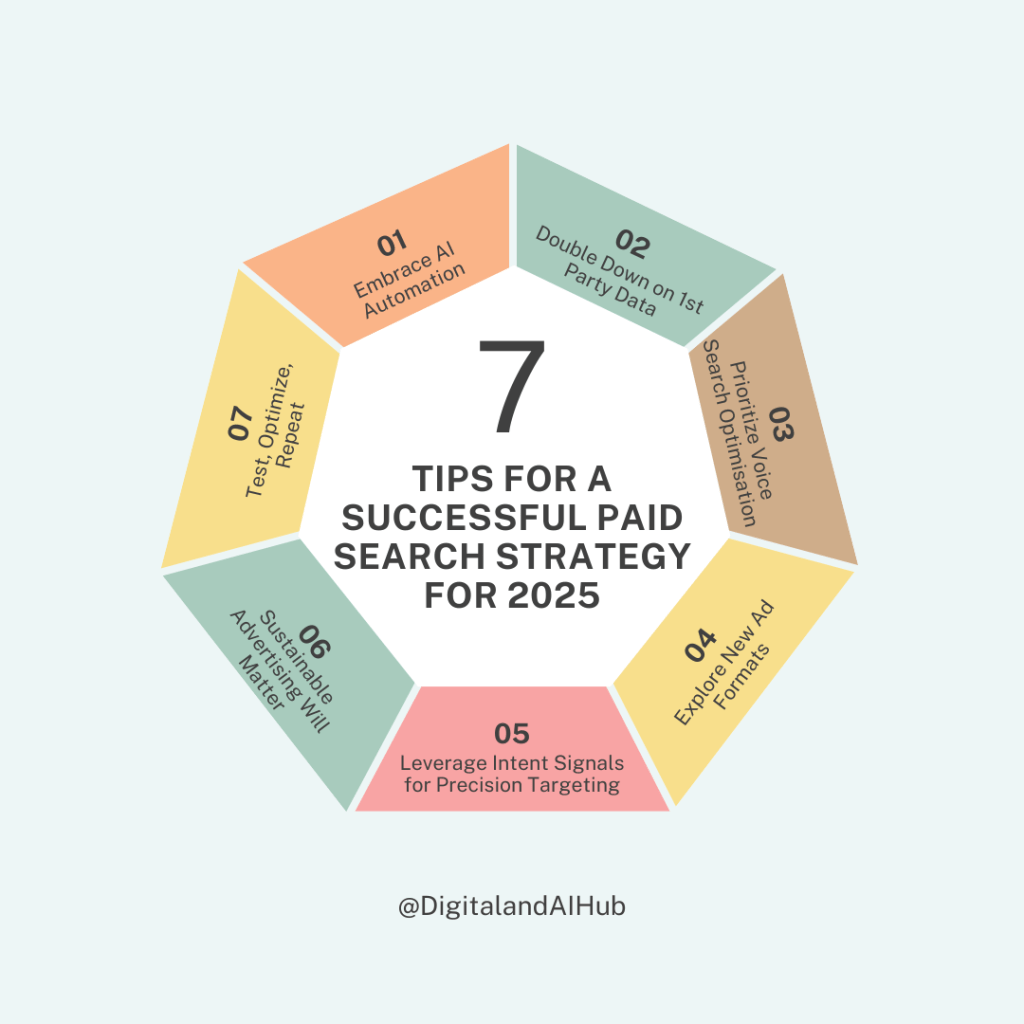
1. Embrace AI-Powered Automation (But Keep a Human Touch)
AI has been the buzzword for years, but by 2025, it won’t just be an add-on—it’ll be the foundation of paid search. Smart bidding, predictive analytics, and responsive search ads will continue to dominate, but that doesn’t mean you can put your campaigns on autopilot.
Here’s the balance:
- Let AI do the heavy lifting: Use tools like Google’s Smart Bidding to automate bid adjustments based on performance signals.
- Maintain oversight: Regularly review ad copy, targeting, and performance metrics. AI is great, but it doesn’t know your brand voice or audience like you do.
Pro Tip: Set clear performance goals (like target CPA or ROAS) and feed AI the right data. The better your inputs, the smarter its outputs.
2. Double Down on First-Party Data
With third-party cookies still dwindling down despite Google’s annoucnement, first-party data will be your goldmine in 2025. This means leveraging the information you already have about your customers—email lists, purchase history, website activity—to create hyper-targeted campaigns.
How to Get Started:
- Use Customer Match in Google Ads to target your existing customers with upsells or re-engagement campaigns.
- Build lookalike audiences based on your highest-value customers.
- Create personalized ad experiences that speak directly to their needs and behaviors.
Pro Tip: Make sure your privacy practices are top-notch. Transparency about how you collect and use data will be a key factor in building trust.
3. Prioritize Voice Search Optimization
By 2025, more than half of searches are expected to be voice-based. This means your paid search strategy needs to account for how people speak—not just how they type.
What to Do:
- Focus on natural language keywords and long-tail phrases.
- Optimize ad copy to answer common questions (e.g., “Where can I find organic coffee near me?”).
- Use location targeting to capture voice searches for local services.
Pro Tip: Test ad formats like call extensions or conversational landing pages to complement voice search behavior.
4. Explore New Ad Formats
Search ads are no longer confined to text. By 2025, expect even more dynamic and interactive ad formats, like video search ads or augmented reality (AR) integrations.
How to Prepare:
- Test YouTube search ads to blend visual storytelling with search intent.
- Use visual extensions like image ads in Google Search to make your brand stand out.
- Experiment with immersive experiences like AR, especially if you’re in e-commerce.
Pro Tip: Interactive ads tend to have higher engagement rates—don’t be afraid to think outside the box.
5. Leverage Intent Signals for Precision Targeting
Paid search will continue to shift toward targeting users based on intent rather than demographics. By 2025, search platforms will offer even more granular data on user behavior, allowing you to tailor your campaigns like never before.
Actionable Steps:
- Use audience layering to combine keyword targeting with behavioral signals, like recent searches or shopping cart abandonment.
- Focus on micro-moments: those split-second decisions when users are ready to buy, learn, or discover.
- Retarget users with personalized messaging based on their journey stage (e.g., “Still looking for the perfect laptop? Here’s 10% off.”).
Pro Tip: Analyze intent data regularly—what worked last quarter might not resonate today.
6. Sustainable Advertising Will Matter
Consumers are increasingly mindful of where their money goes, and brands that prioritize sustainability will gain an edge. In 2025, your paid search strategy should reflect these values.
How to Incorporate This:
- Highlight eco-friendly practices in your ad copy (e.g., “Sustainably sourced materials” or “Carbon-neutral shipping”).
- Bid on cause-related keywords that align with your brand values.
- Use ad extensions to link to pages about your sustainability efforts.
Pro Tip: Authenticity is key. Avoid greenwashing, as customers can spot insincerity a mile away.
7. Test, Optimize, Repeat
This isn’t new, but it’s still the most important part of any paid search strategy. By 2025, the tools available for testing and optimization will be even more sophisticated, so make them your best friend.
Key Areas to Test:
- Ad copy: Which headlines drive the most clicks?
- Keywords: How do broad match vs. phrase match keywords perform?
- Landing pages: Which design converts better?
- Extensions: Do callouts or structured snippets improve CTR?
Pro Tip: Use tools like Google’s Experiment feature or A/B testing platforms to refine your campaigns.
Looking Ahead
The paid search landscape in 2025 will be dynamic, data-driven, and more competitive than ever. But with the right strategies, you can cut through the noise and deliver campaigns that not only perform but also build lasting connections with your audience.
So, are you ready to take your paid search strategy into the future? Let’s talk about what trends you’re most excited about in the comments below—I’d love to hear your thoughts!
 The Digital Marketing and AI Hub
Leave a comment